Sustainable Solutions

Biogas Plants in South India

Patented FRP biogas plants that turn kitchen waste and cow dung into free cooking gas and organic fertiliser — for homes, farms, institutions and industries in South India.

  • Durable & Reliable
  • Eco-Friendly
  • Trusted in South India
  • Expert Support
Biogas Solutions

All Biogas Plants Models

Buyer’s Guide

Biogas Plants: Buying Guide

A biogas plant is the simplest way to deal with food waste and cut LPG costs at the same time. Organic waste goes into an airtight FRP digester, where natural bacteria break it down into methane-rich biogas for cooking, heating or power generation, and nutrient-rich slurry you can use as fertiliser.

How a biogas plant works

Organic waste mixed with water enters an airtight digester. Without oxygen, bacteria slowly break it down and release biogas, which MNRE describes as about 55–60% methane and 35–40% carbon dioxide. The gas collects in the gas holder and is piped to a biogas stove, while the digested slurry flows out through the outlet and can be used as organic manure.

According to MNRE, 1 m³ of biogas is roughly equal to:

  • 0.42 kg of LPG
  • 0.62 litres of kerosene
  • 3.47 kg of firewood
  • About 2 units (kWh) of electricity

Our biogas range

Emerald Enterprises is the only company in India holding a patent on the Level Model High-Tech Biogas Plant. Our range covers every scale:

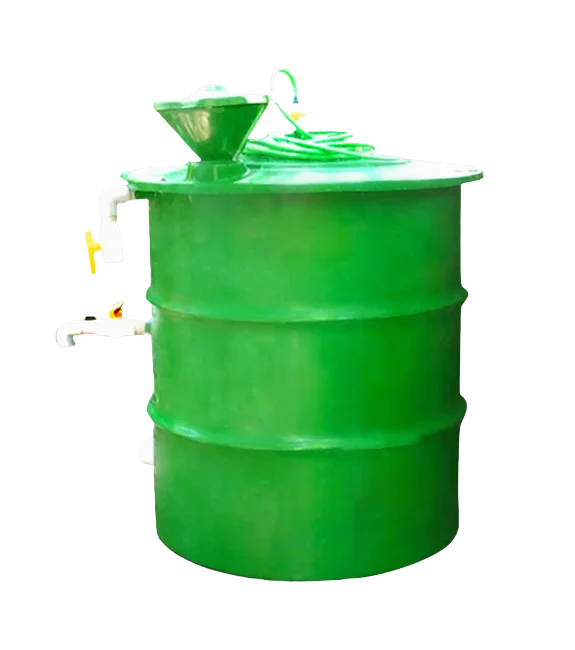
  • Mixed Lever Biogas Plant – household models from 0.5 m³ to 2 m³ for 3 to 20 kg of waste a day
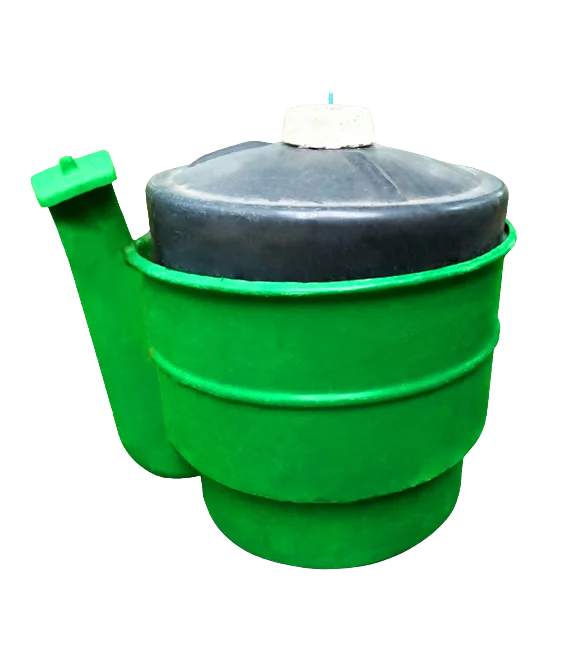
  • Floating Biogas Plant – water-jacket models from 0.5 m³ to 3 m³ for 2.5 to 30 kg of waste a day
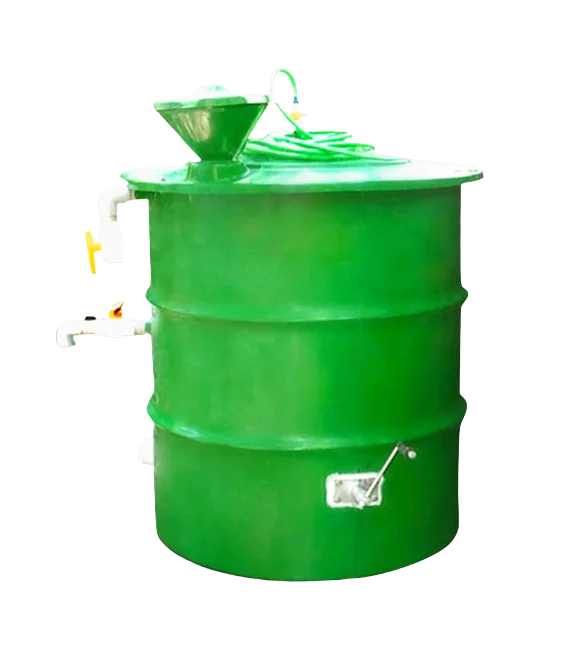
  • High Pressure Biogas Plant – lever-controlled gas flow with improved gas storage
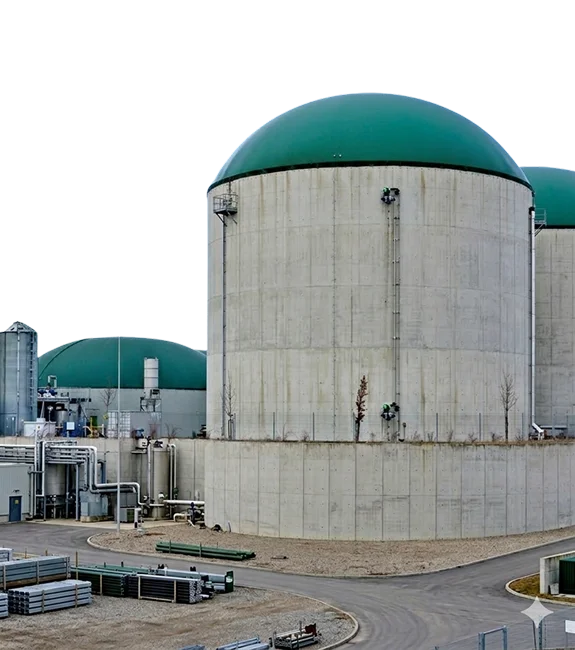
  • Industrial Biogas Plant – custom systems for food waste, agricultural waste and sewage

How to choose the right size:

  • Weigh the organic waste your home or facility produces each day
  • Pick a model whose daily waste capacity matches it, with a little room to grow
  • Allow space for the plant, access to water and a short gas line to the kitchen

Feeding and care tips

Feed a similar amount of waste every day. Sudden large increases can make the digester too acidic and stop gas production — if that happens, pause feeding and restart slowly.

Keep your plant healthy:

  • Mix waste with water; MNRE recommends roughly equal parts for cow-dung plants
  • Keep plastic, glass, metal, paper, chemicals and detergents out of the plant
  • Add citrus peels and tamarind only in small quantities
  • Remove any scum layer that forms on the surface
  • Use the gas in a well-ventilated kitchen and keep open flames away from the gas holder

Subsidies and government support

Household biogas plants have been supported under MNRE's Biogas Programme, which provided central financial assistance per plant for 2021-22 to 2025-26, and through schemes run by the Kerala Agriculture Department and local bodies. Scheme periods, amounts and eligibility change, so ask us or your local body for the current position. As a registered service provider for Suchitwa Mission Kerala and ANERT, we can guide you through the process.

Product Support

Biogas Plants FAQs

View All FAQs
01.

What is a biogas plant and how does it work?

A biogas plant converts organic waste such as food scraps, cow dung and agricultural residue into biogas, a clean renewable fuel for cooking, heating or power generation. Inside an airtight tank, natural bacteria break the waste down and release methane-rich gas that is piped to a stove or generator. The leftover slurry is a nutrient-rich organic fertiliser.
The Mixed Lever Biogas Plant costs ₹22,000 (0.5 m³), ₹30,000 (0.75 m³), ₹37,000 (1 m³), ₹44,000 (1.5 m³) and ₹55,000 (2 m³), inclusive of GST, with transportation charged extra. Floating, high pressure and industrial biogas plants are priced by capacity and site, call +91 87147 04086 for a quotation.
Our biogas plants can process kitchen food waste, vegetable peels, cow and poultry dung, fish waste, agricultural crop residue and wastewater sludge. Never add plastic, glass, metal or other non-organic material to the plant.
A portable biogas plant is usually installed in 1–2 days and needs a flat surface with access to water and organic waste. Fixed plants can take 3–7 days depending on the size and site preparation. Our team handles the installation and shows you how to operate and maintain the plant.
Yes. Emerald Enterprises is the only company in India holding a patent on the Level Model High-Tech Biogas Plant, a design developed for better gas retention, easier maintenance and higher efficiency.
According to MNRE, 1 m³ of biogas is roughly equal to 0.42 kg of LPG, 0.62 litres of kerosene or 3.47 kg of firewood. How much LPG you save depends on the plant size and how much waste you feed it every day.
Yes, when the plant is installed and used correctly. Cook in a well-ventilated kitchen, keep open flames away from the gas holder and pipes, and check the gas line for leaks. Never enter an enclosed digester, as biogas can cause suffocation.
For most homes the Mixed Lever Biogas Plant is the best fit. It comes in five sizes, from 0.5 m³ for about 3 kg of waste and water a day up to 2 m³ for about 20 kg a day. The Floating Biogas Plant suits homes, farms and institutions with 2.5–30 kg of daily waste, the High Pressure model adds lever-controlled gas flow, and the Industrial Biogas Plant is custom-built for hotels, farms and factories.
The Mixed Lever Biogas Plant costs ₹22,000 (0.5 m³), ₹30,000 (0.75 m³), ₹37,000 (1 m³), ₹44,000 (1.5 m³) and ₹55,000 (2 m³), inclusive of GST, with transportation charged extra. Floating, high pressure and industrial biogas plants are priced by capacity and site — call +91 87147 04086 for a quotation.
Gas output depends on the plant capacity and how much waste you add. As a guide, our Mixed Lever models give about 20 minutes to 4 hours of cooking gas a day for 3 kg to 20 kg of waste, and our Floating models give about 45 minutes to 5 hours a day for 2.5 kg to 30 kg of waste. Our team will help you choose a size based on your daily waste.
The slurry that flows out of the plant is a nutrient-rich organic fertiliser. You can use it for kitchen gardens, vegetables, coconut trees and farm crops, which reduces the need for chemical fertilisers.
Yes. As a registered service provider for ANERT (Agency for New and Renewable Energy Research and Technology) and Suchitwa Mission Kerala, we help customers apply for available government subsidies. Eligibility depends on the plant size, your location and the current scheme guidelines, so contact us for the latest information.
The most common reason is overfeeding, which makes the digester too acidic. Stop feeding for a few days and then restart with small, steady amounts. A thick scum layer on the surface can also block gas; remove it by hand. If the problem continues, call our service team.

Need a custom size or a quote?

Share your requirement — capacity, seating, size or location — and our Kochi team will recommend the right product and send a detailed quotation within 24 hours.
Contact Us