Full Independence

Emerald Solar · Kerala & South India

Off-Grid Solar Power Plant with Battery Storage

Off-grid solar systems with lithium or tubular batteries for remote homes, farms, estates and sites without reliable grid power in Kerala. 1 kVA to 10 kVA configurations.

Calculate Savings
₹78,000 PM Surya Ghar subsidy (3 kW)
351units a month from 3 kW
₹2,457electricity value a month at ₹7/unit
~300 sq ftshadow-free roof needed

Overview

Off-Grid Solar Power Plant: What You Get

An off-grid solar power plant is a self-contained system: solar panels charge a battery bank through a solar PCU (MPPT charge controller plus inverter), and the batteries power your loads day and night with no connection to the grid.

It is ideal for estates, farms, hill-side homes and work sites where the grid does not reach or is unreliable. Sizing is driven by the loads you need to run and for how many hours, so every off-grid plant starts with a load survey. Choose LiFePO4 lithium batteries (6,000+ cycles, zero maintenance) or C10 tubular lead-acid batteries for a lower upfront cost.

Best for

  • Remote homes, plantations and estates
  • Farms, poultry and dairy units
  • Sites where the grid does not reach
  • Places with long, frequent power cuts
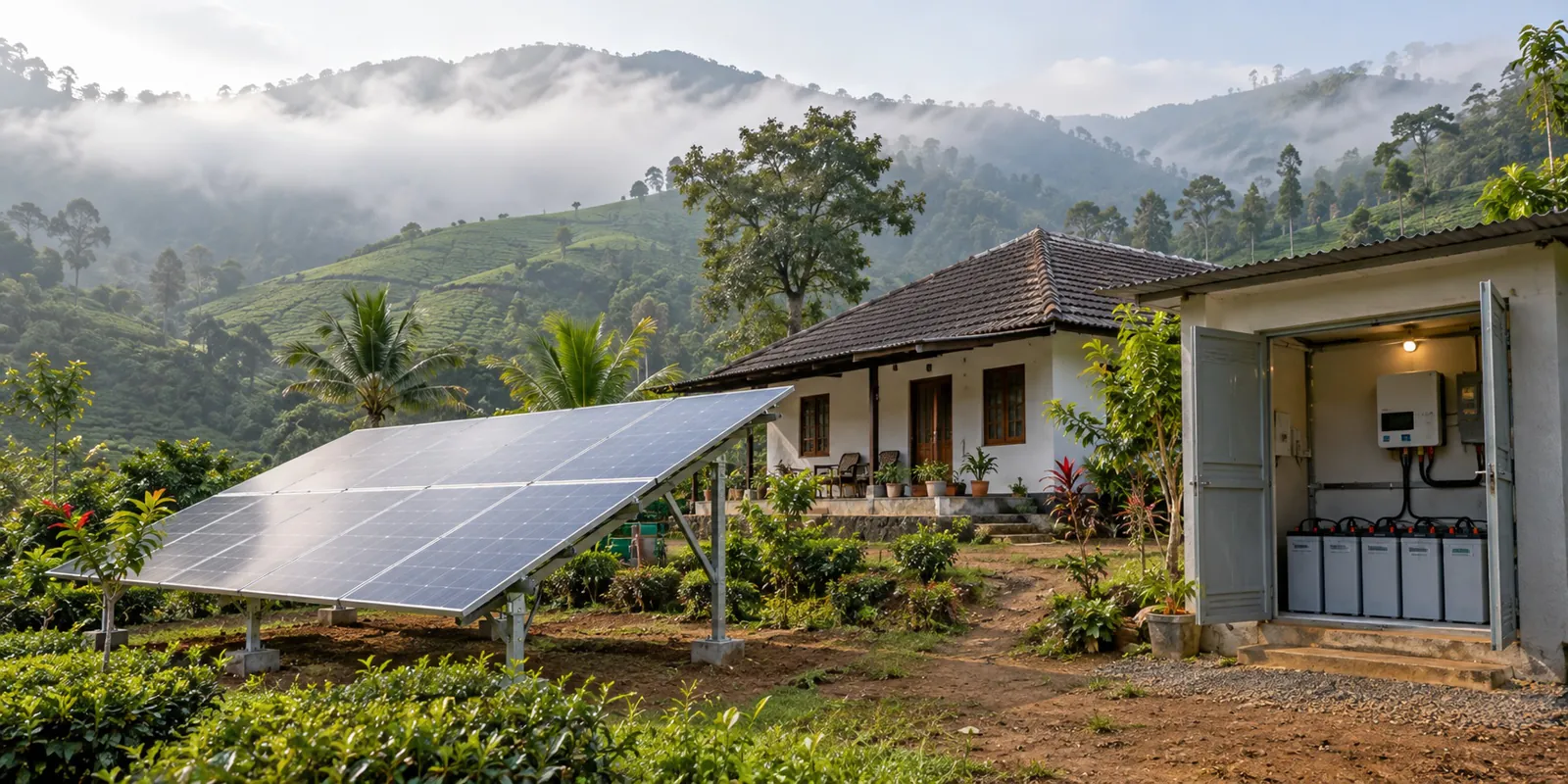
Off-grid solar power plant with battery room powering a hill-side farm home

How It Works

How an Off-Grid Solar System Works

  1. Solar panels generate DC power through the day
  2. DCDB protects the array from faults and surges
  3. Solar PCU charges the batteries and powers the loads
  4. Battery bank supplies stored power at night
  5. ACDB distributes AC power to the loads
  6. Lights, fans and appliances run 24×7 with no grid

On-Grid vs Off-Grid vs Hybrid: Which Suits You?

FeatureOn-GridOff-GridHybrid
Works during power cuts — Yes Yes
Battery storage — Yes Yes
Net metering & export credits Yes — Yes
Lowest upfront cost & fastest payback Yes — —
PM Surya Ghar subsidy (residential) Yes — Yes
Power where the grid does not reach — Yes —
Charge an EV at night from solar — Yes Yes

Hybrid subsidy eligibility is calculated on the grid-connected solar capacity, as per prevailing government norms.

Off-Grid Configurations

InverterSolar arrayBattery bankSuits
1 kVA1 kW2.4 kWhLights, fans, TV, Wi-Fi
3 kVA3 kW5 kWh+ fridge, pump, computers
5 kVA5 kW7.5–10 kWh+ 1 AC, mixer, iron
10 kVA10 kW15–20 kWhLarge homes, clinics, shops

Typical configurations. Final sizing is based on a load survey of your premises.

  • Lithium LiFePO4: 6,000+ cycles, zero maintenance, compact wall-mount, built-in BMS.
  • Tubular lead-acid: lower upfront cost, robust and proven C10 solar-grade batteries.
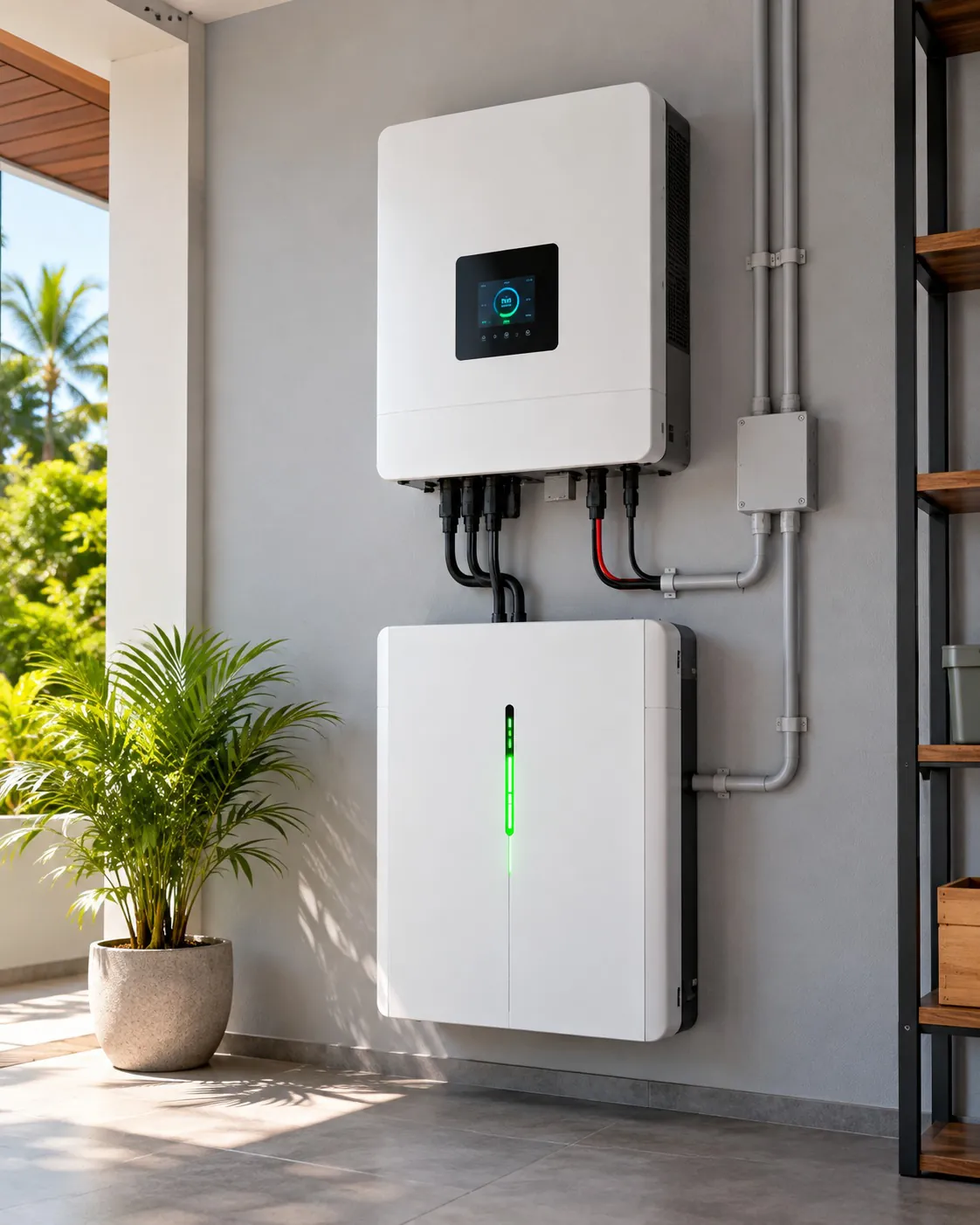
Wall-mounted hybrid solar inverter with LiFePO4 battery storage

Monthly Energy Balance

How Far Do 351 Units Go?

Add an all-electric lifestyle one load at a time and see how much of a 3 kW plant’s monthly output is still left.

+ Lights, fans, fridge, TV, pump (250) 101 spare
+ 1.5 ton AC, 8 hours a day (134) 33 short
+ All cooking on induction (93) 127 short
+ Electric scooter, 1,000 km (26) 153 short
+ Electric car, 1,500 km (250) 403 short

Monthly energy balance only, in units. Daytime solar used directly or exported is credited through net metering; evening and night use draws from the grid or a battery.

Solar + Your Lifestyle

What a 3 kW Solar Plant Can Power

A 3 kW plant generates about 351 units a month. Here is what that energy means for an electric car, an electric scooter, an air conditioner and your kitchen, worked out at ₹7 a unit.

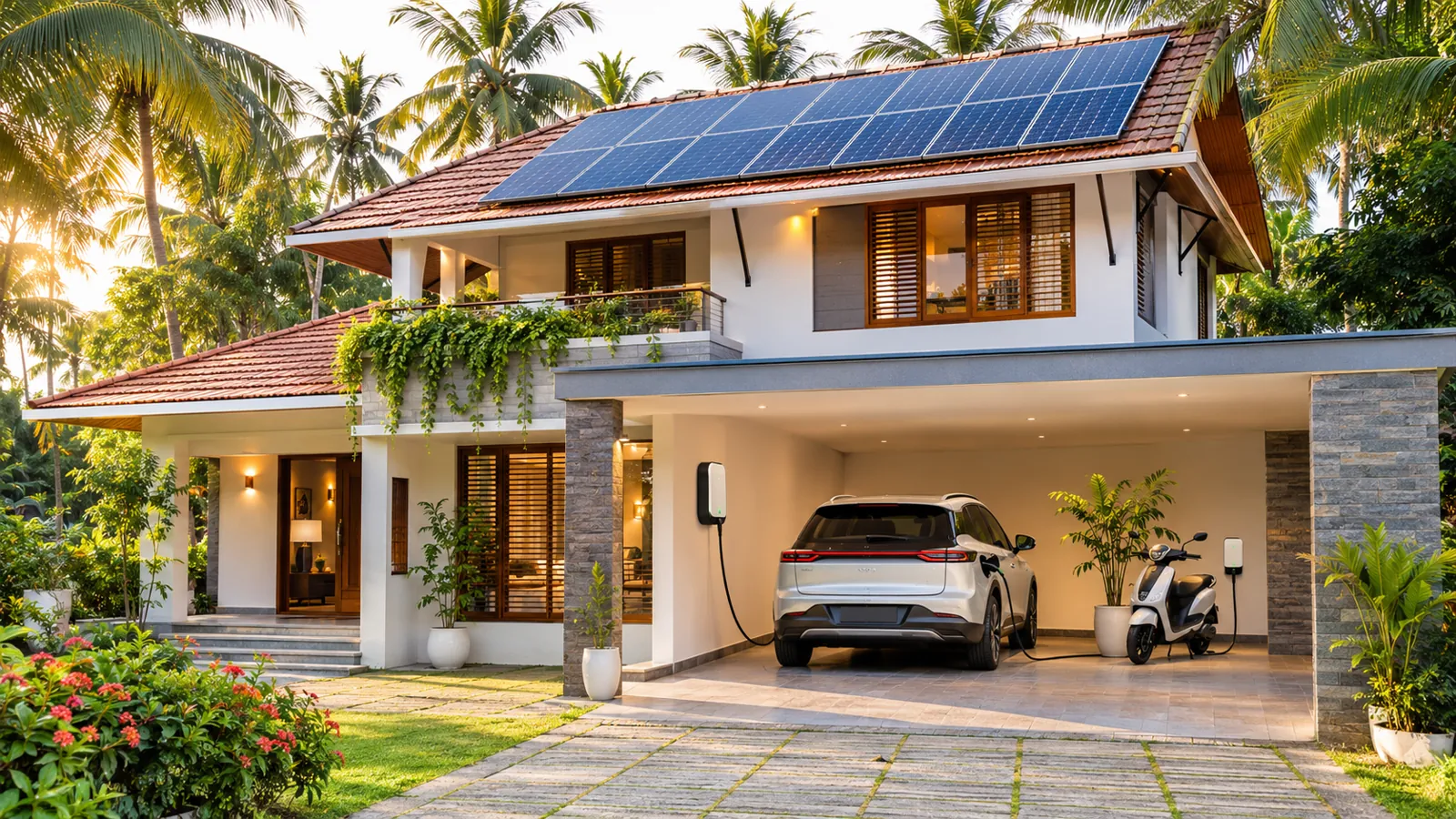
Electric car charging at a Kerala home with rooftop solar

Solar + Electric Car · Example: Tata Punch EV

Drive your EV on your own rooftop solar

Sunshine is the fuel. At 6 km per unit, 3 kW of solar is enough for about 2,106 km of driving a month if all of it went to the car. A typical owner driving 1,500 km a month uses about 250 units, 71% of this plant’s output.

2,106 kmEV driving a month from 3 kW*
₹231full charge of a 30 kWh battery at grid tariff
₹1.17/kmat grid tariff vs ₹7.13/km on petrol
₹1,07,400fuel saved a year driving 1,500 km/month
Solar system3 kW5 kW7 kW
Monthly generation351 units585 units819 units
EV driving per month*2,106 km3,510 km4,914 km
Full charges / month (30 · 40 kWh)10.6 · 8.017.7 · 13.324.8 · 18.6
Investment after subsidy₹1,22,000₹2,37,000₹3,62,000
Annual electricity value₹29,484₹49,140₹68,796
Payback period4.1 years4.8 years5.3 years
Annual return24.2%20.7%19.0%

5 kW is the ideal start for a home with one EV: solar power for the house and the car. With a hybrid system you can also charge at night from the battery.

* Theoretical figure if all solar power goes to the EV. Assumes 3.9 units/kW/day (Kerala average), ₹7/unit, 6 km per metered unit, 10% charging loss, petrol ₹107/litre at 15 km/l. An on-grid system cannot charge the car directly at night; net-metering rules apply. Confirm variant, range and price with the vehicle maker. Not a guaranteed return.
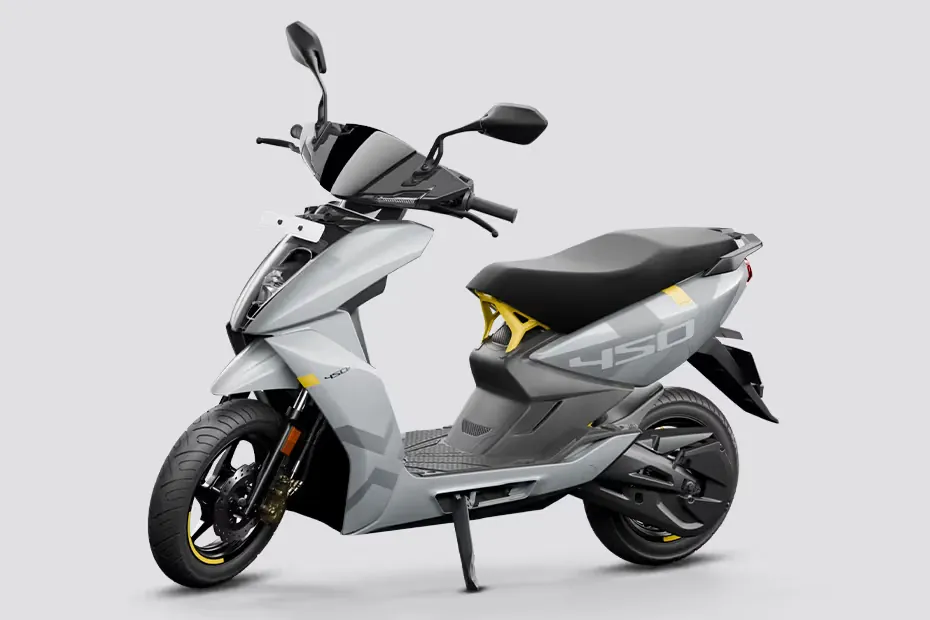

Electric scooter that can be charged from rooftop solar

Solar + Electric Scooter · Example: Ather 450 series

Your daily ride, charged by the sun

Riding 1,000 km a month costs just ₹163–₹183 even at grid tariff. A 3 kW plant could fully charge a 2.9 kWh scooter about 110 times a month, so one scooter uses only 7% of its output.

₹22–₹27per full charge at ₹7/unit
₹0.16approx. cost per km
110full charges a month from 3 kW*
₹26,337saved a year vs a petrol scooter (1,000 km/month)
Model / batteryIDC rangeFull charge1,000 km / monthCharges / month from 3 kW*
Ather 450S · 2.9 kWh 122 km ₹22 ₹183 110
Ather 450S · 3.5 kWh 161 km ₹27 ₹167 91
Ather 450X · 2.9 kWh 126 km ₹22 ₹177 110
Ather 450X · 3.5 kWh 161 km ₹27 ₹167 91
Ather 450 Apex · 3.5 kWh 165 km ₹27 ₹163 91

3 kW of solar is more than enough for one scooter; the rest powers your home and cuts your bill.

* Theoretical figure if all solar power goes to the scooter; excludes household use. Based on the maker’s published IDC range, 10% charging loss, ₹7/unit, petrol scooter at 45 km/l. Real-world range will be lower than IDC. Confirm variant, price and availability with the dealer.

Inverter air conditioner running on rooftop solar power

Solar + Air Conditioner · 1.5 & 2 ton inverter AC

Beat the summer heat without the bill shock

The sun heats, solar cools. Running a 1.5 ton 3-star AC for 8 hours a day costs about ₹941 a month, and needs only 38% of a 3 kW plant’s output.

₹941/mo1.5 ton 3-star AC, 8 hours a day
38%of 3 kW output for one 1.5 ton AC*
₹3,024saved a year with a 2 ton 5-star vs 3-star
21.5 ton ACs this plant can run*
AC (8 hours/day)Units / monthCost / monthCost / yearShare of 3 kW
1.5 ton · 3-star 134 ₹941 ₹11,290 38%
1.5 ton · 5-star 106 ₹739 ₹8,870 30%
2 ton · 3-star 192 ₹1,344 ₹16,128 55%
2 ton · 5-star 156 ₹1,092 ₹13,104 44%

Solar powers the AC directly while it runs in the daytime. A BEE 5-star inverter AC plus solar doubles the savings; set it to 24–26°C to save even more.

* 8 hours/day, 30 days/month; illustrative average input: 1.5 ton 3-star 0.56 kW, 5-star 0.44 kW; 2 ton 3-star 0.80 kW, 5-star 0.65 kW. Actual use varies with model, room size and temperature setting; check the annual kWh on the BEE label.

Cooking on an induction hob powered by rooftop solar instead of LPG

Solar + Induction Cooking · 14.2 kg LPG at ₹949

Cook with the sun, save on gas cylinders

One 14.2 kg cylinder equals roughly 138 units of induction cooking. Moving all your cooking to induction needs about 93 units a month, only 27% of a 3 kW plant, and avoids about ₹7,697 of LPG a year.

8 → 4cylinders a year when half the cooking moves to induction
₹7,697of LPG a year avoided with full induction
27%of 3 kW output covers all cooking
93 unitsa month for all cooking on induction
Cooking moved to inductionLPG cylinders / yearLPG cost / yearInduction units / month
0% (LPG only) 8.1 ₹7,697 0
25% 6.1 ₹5,773 23
50% 4.1 ₹3,849 47
75% 2.0 ₹1,924 70
100% (all induction) 0.0 ₹0 93

No flame, no gas-leak worry and a cooler kitchen. Keep LPG as backup and every cylinder lasts longer.

One 14.2 kg cylinder every 45 days (₹949, Kottayam, 31.10.2026); 1 cylinder ≈ 138 induction units. On grid power induction costs about the same as LPG; savings come from cooking on daytime solar. Evening cooking on solar needs a hybrid system.

Solar Savings Calculator

Which Solar Plant Size Do You Need?

Tick what you run at home, pick a plant size, and see generation, savings, payback and whether the plant covers your loads. Figures use Kerala averages (3.9 units/kW/day, ₹7/unit).

1. What do you want to run on solar?
0 units
3. Choose a plant size

Your 3 kW solar plant

0 units/month

worth ₹0 a month at ₹7/unit

  • Your selected load0 units
  • PM Surya Ghar subsidy₹0
  • Price after subsidyOn survey
  • Payback periodOn survey
  • Annual savings₹0
  • Roof area needed0 sq ft

Indicative estimates only. Prices are Emerald’s catalogue figures after subsidy for residential on-grid plants; 1, 2 and 10 kW plants are priced after a free site survey. Actual generation varies with location, shading and season; bill savings depend on KSEB tariff slabs and net-metering rules.

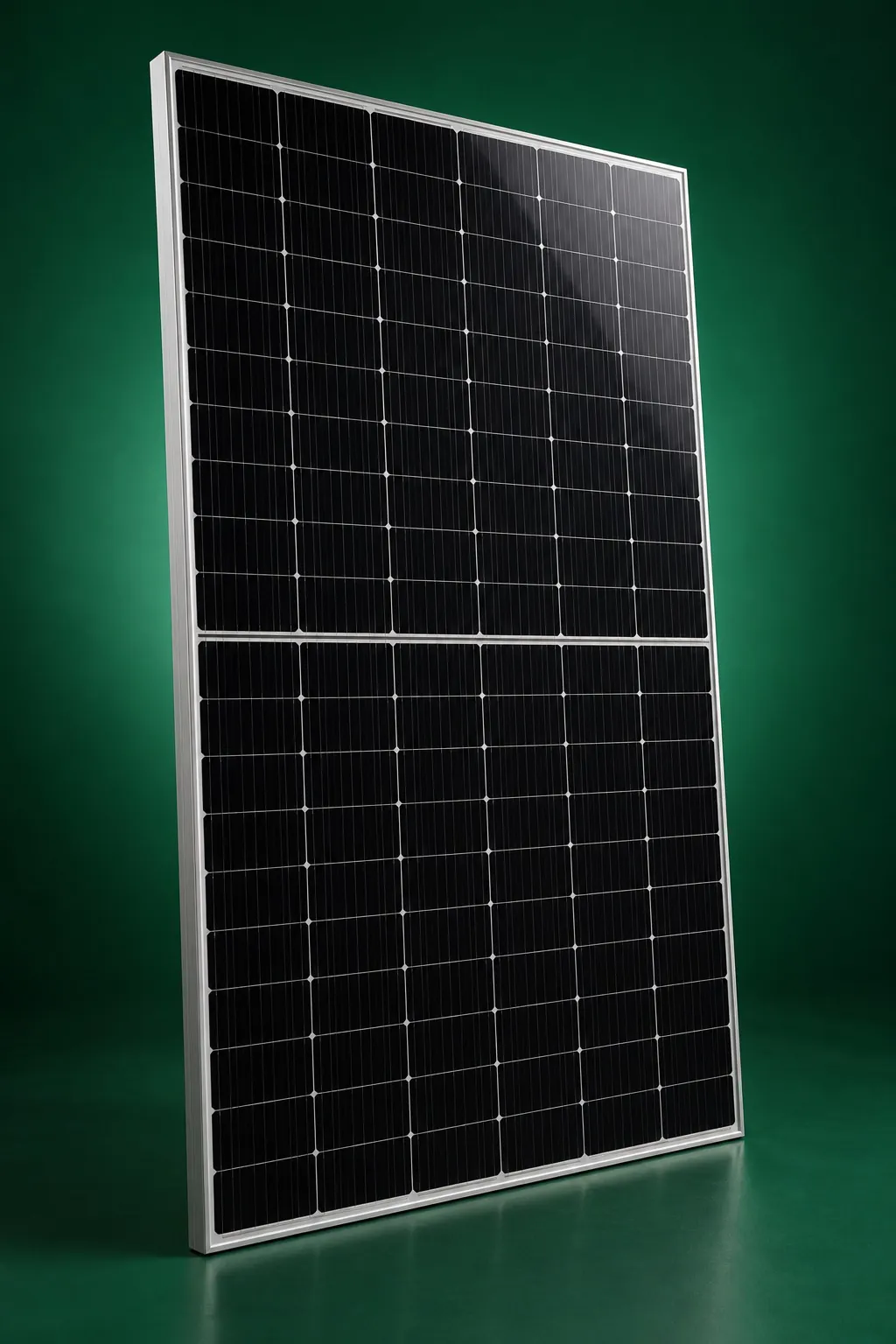
Tier-1 monocrystalline half-cut solar panel used by Emerald

Solar PV Modules

Tier-1 Panels Built for Kerala’s Heat and Humidity

Cell technologyMonocrystalline, 144 half-cut cells
Module optionsMono PERC 540–555 Wp · TOPCon bifacial 575–590 Wp
Module efficiency21% – 22.8%
Dimensions2278 × 1134 × 30–35 mm (approx.)
Frame & glassAnodised aluminium, 3.2 mm tempered AR glass
Junction boxIP68, 3 bypass diodes, MC4-compatible
CertificationsBIS / IEC 61215, IEC 61730, ALMM listed
Warranty12-year product · 25–30-year linear performance

Brand and wattage are confirmed at the time of quotation based on availability and site design. See also our solar panel product page.

Emerald solar engineer doing a free rooftop site survey with a Kerala homeowner

How We Work

From Survey to Sunshine in 5 Steps

Complete, ready-to-install systems. We handle the engineering, the KSEB paperwork and the subsidy, so going solar is simple.

  • Tier-1 ALMM-listed solar modules
  • Grid-tie / hybrid inverter with app monitoring
  • Hot-dip galvanised mounting structure
  • Earthing & lightning arrester
  • ACDB / DCDB with surge protection
  • UV-resistant DC & AC cabling
  • KSEB feasibility & net-meter paperwork
  • PM Surya Ghar subsidy application support
  • Installation, commissioning & handover
  1. 1Free site surveyRoof, shading and load assessment by our engineers.
  2. 2Design & quoteRight-sized system, transparent pricing and a savings estimate.
  3. 3ApprovalsKSEB feasibility, net-metering and subsidy paperwork.
  4. 4InstallationNeat, safe installation by trained technicians.
  5. 5CommissioningNet meter live, handover and app-based monitoring.
Technician cleaning rooftop solar panels under the Emerald Care maintenance plan

Emerald Care

After-Sales Support That Keeps Output at Its Peak

  • Performance monitoring: remote tracking of generation through the inverter app.
  • Preventive maintenance: scheduled health checks of modules, wiring and earthing.
  • Panel cleaning: professional cleaning on request or under AMC.
  • Warranty support: we handle manufacturer claims on your behalf.

Solar Power Plant FAQs

Off-Grid Solar System FAQs

All FAQs
01.

How long do off-grid solar batteries last?

LiFePO4 lithium batteries are rated for 6,000+ charge cycles with a built-in BMS and no maintenance. C10 tubular lead-acid batteries cost less upfront, need periodic water top-up and typically need replacement sooner.
Yes. A 3 kVA configuration with a 3 kW array and about 5 kWh of storage typically covers a fridge, pump and computers in addition to lights, fans and TV. Larger pumps are sized in the load survey.
Indicative Emerald prices for residential on-grid plants after the ₹78,000 PM Surya Ghar subsidy are about ₹1,22,000 for 3 kW, ₹2,37,000 for 5 kW and ₹3,62,000 for 7 kW. Prices include panels, inverter, galvanised structure, earthing, lightning arrester, ACDB/DCDB, cabling, net-meter liaison and commissioning. Hybrid and off-grid systems cost more because of the battery. The final price is confirmed after a free site survey.
Check the units on your last few KSEB bills and divide the monthly average by about 117 (what 1 kW generates in a month in Kerala). A home using 350 units a month needs about 3 kW; 585 units needs 5 kW. Add about 2 kW if you plan to buy an electric car. Use the calculator on this page or book a free site survey for an exact size.
On-grid is the cheapest, pays back fastest and gets the subsidy, but it switches off during power cuts. Off-grid runs entirely on batteries and suits sites without a reliable grid. Hybrid combines net metering with a battery, so it saves money and keeps your home running through outages. Most Kerala homes with a stable supply choose on-grid; homes with frequent outages or an EV choose hybrid.
The PM Surya Ghar residential subsidy applies to grid-connected rooftop systems. Off-grid schemes change from time to time; our team will tell you what is available for your site when we quote.
The battery bank supplies stored energy and panels still generate at reduced output. For sites with long monsoon spells we size the array and battery with extra margin, or add a generator or grid input as backup.
For residential grid-connected rooftop solar, the PM Surya Ghar: Muft Bijli Yojana gives ₹30,000 per kW for the first 2 kW and ₹18,000 for the third kW, capped at ₹78,000. So 1 kW gets ₹30,000, 2 kW gets ₹60,000 and 3 kW or more gets ₹78,000. The subsidy is credited to your bank account after commissioning and inspection, as per prevailing government norms.
About 3.9–4 units a day on average, or roughly 117–120 units a month and 1,400 units a year. Generation is highest from January to May and lower during the monsoon; the annual average already accounts for cloudy and rainy days.
At ₹7 a unit, residential plants pay back in about 4.1 years (3 kW), 4.8 years (5 kW) and 5.3 years (7 kW), equal to a simple annual return of 19–24%. Panels carry a 25–30-year performance warranty, so you enjoy 20 or more years of near-free power after payback. Commercial plants typically pay back in 3–5 years with accelerated depreciation.

Explore More Solar Plants

Compare Other Solar Power Plants

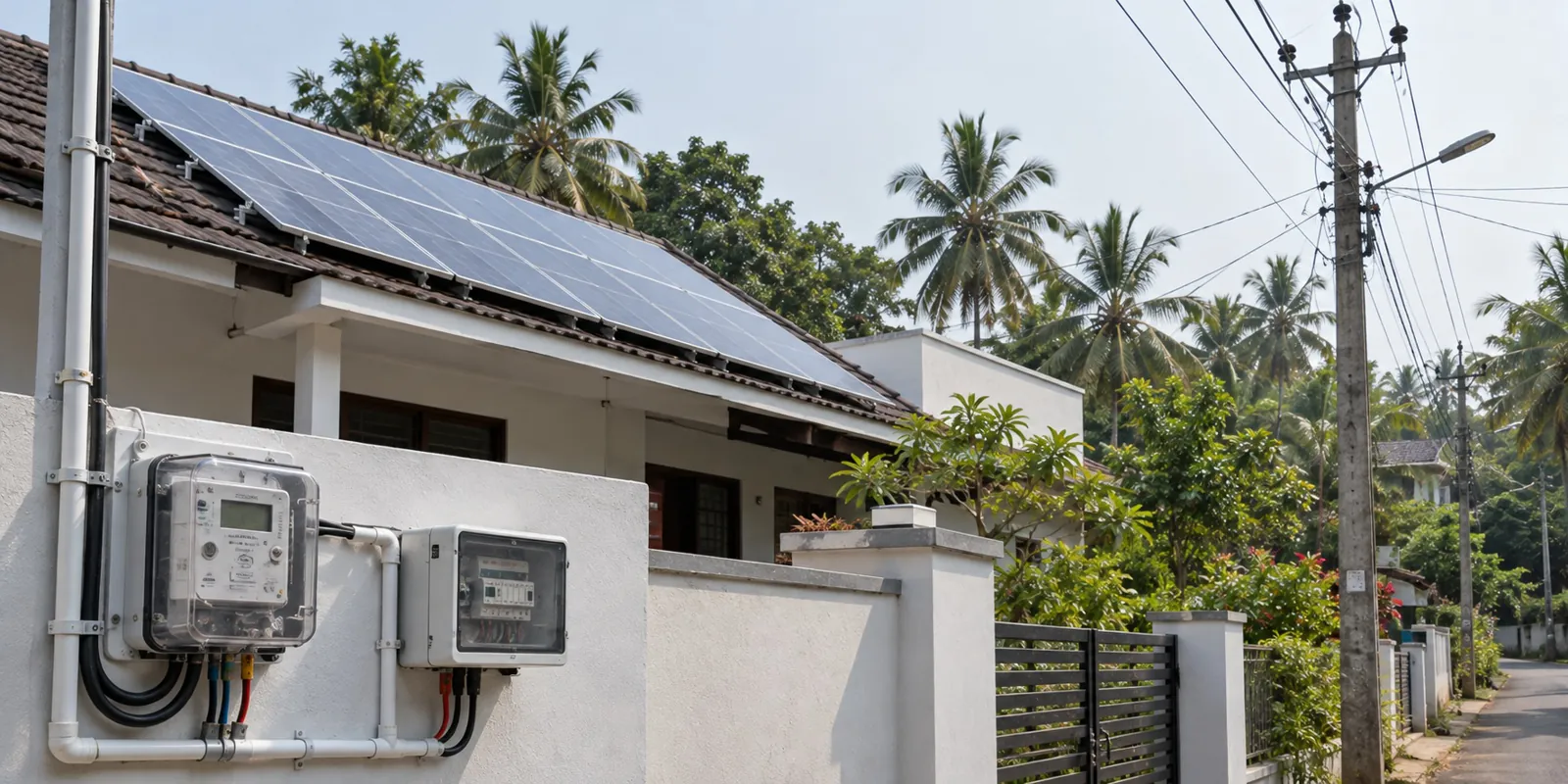
On-grid rooftop solar system with KSEB net meter on a Kerala home
Most Popular

On-Grid Solar System

On-grid rooftop solar systems in Kerala with KSEB net metering and PM Surya Ghar subsidy. Lowest cost per unit, 4–5 year...

View details
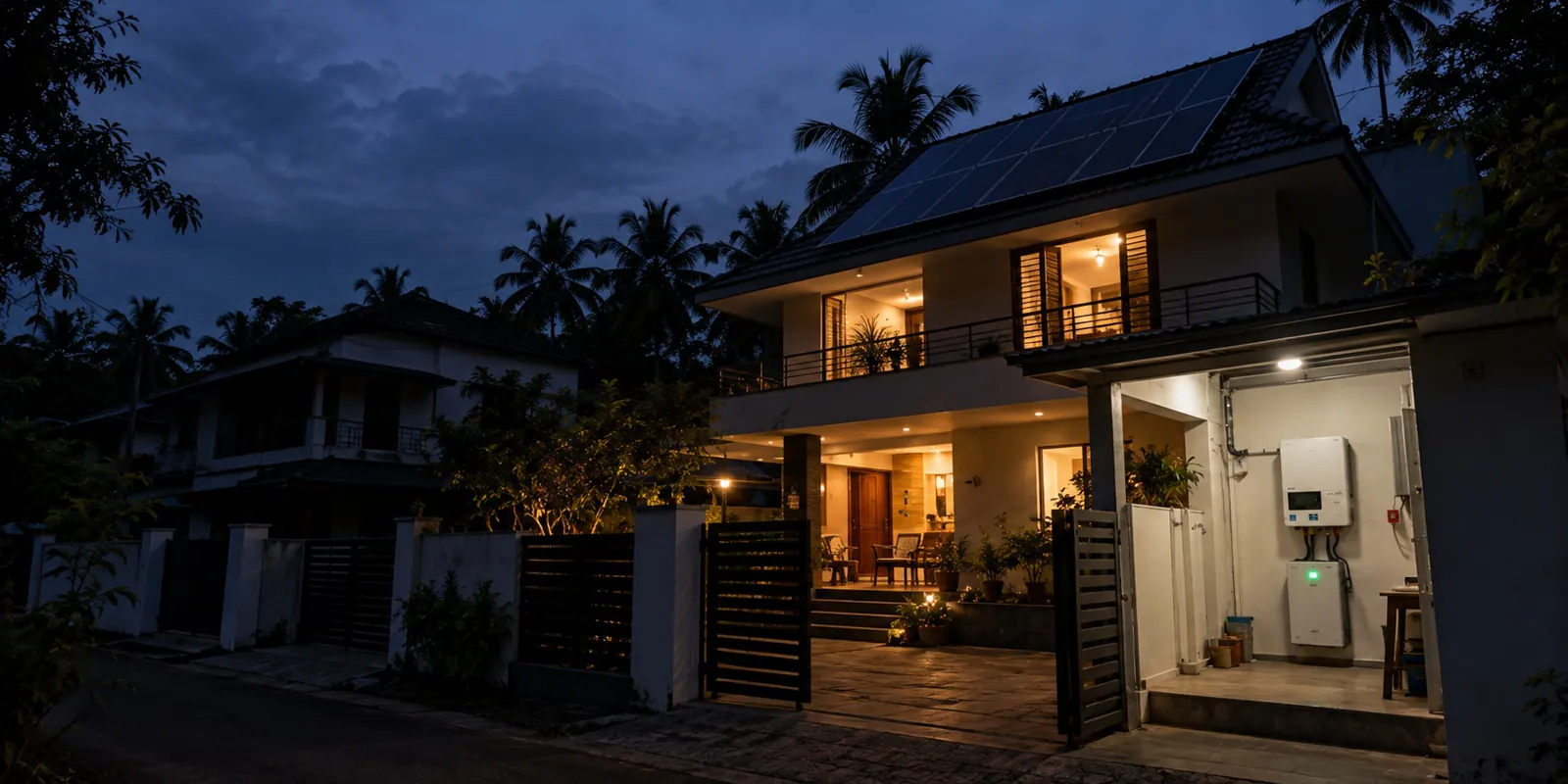
Kerala home lit at night by a hybrid solar power plant with battery backup
Best of Both

Hybrid Solar System

Hybrid solar systems in Kerala with net metering and lithium battery backup. Power through outages, charge your EV at ni...

View details
3 kW rooftop solar power plant on a modern Kerala home
Popular

3 kW Solar Plant

3 kW on-grid solar plant in Kerala for ₹1,22,000 after ₹78,000 subsidy. 351 units a month, 4.1-year payback, 24% annual...

View details
Kerala family in front of their home with a 2 kW rooftop solar power plant

2 kW Solar Plant

2 kW rooftop solar power plant in Kerala: about 234 units a month, ₹60,000 PM Surya Ghar subsidy, 4 panels on 200 sq ft....

View details

Get a free site visit & estimate for your solar plant

Call or WhatsApp +91 87147 04086. Our engineers check your roof, shading and load, then give you a transparent quote and savings estimate.

Contact Us